

There is a corner saloon in downtown Chicago where, in 1898, a nickel got you a beer and a free sandwich.
Well, the price of beer has gone up a bit since then. The family running the place hasn’t.
Welcome to The Berghoff, a legendary institution in downtown Chicago and the first stop on my tour of Route 66’s hundred-year-old family businesses.
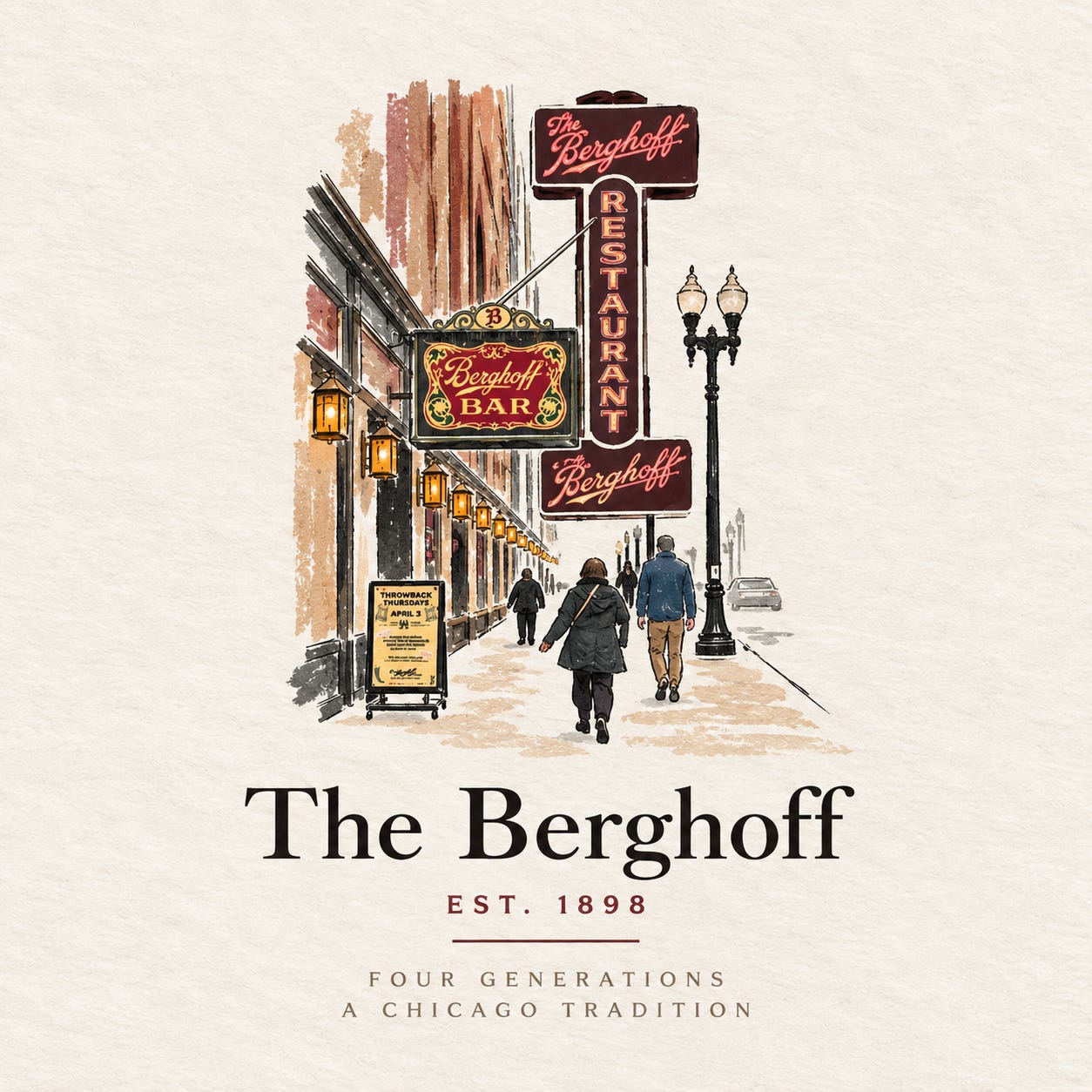
The Berghoff stands close enough to the famous route’s starting line that you could walk there before your brewski got warm. But before Route 66 opened to drivers, there’s a story about an industrious German immigrant who saw a huge opportunity in Chicago brewed in the likeness of his hometown.
Building A Brewery in Fort Wayne
Herman Joseph Berghoff was born November 13, 1852, in Dortmund, in the Prussian province of Westphalia — the third son of a carpenter named Franz Anton Berghoff. He left home before he was eighteen, and spent the next few years doing the kind of restless, unglamorous work that rarely makes it into a company history: a stretch aboard a ship, a stint with a traveling Wild West show, agricultural labor across the American South and West. By twenty, he’d landed in Pittsburgh, where his younger brother Henry joined him; the two stayed there more than a year before the trip that actually molded the rest of their lives.
In 1874, the brothers were passing through Fort Wayne, Indiana, on a train. A hungry Henry jumped off at a stop looking for pretzels. He came back with a job offer instead — and both brothers got off the train for good. Herman spent his first years in Fort Wayne working ordinary retail jobs: watches and jewelry, boots and shoes, dry goods, a stretch at a wholesale grocery.
Two more brothers, Hubert and Gustav, eventually followed him to the same city, and together the four of them built a small bottling operation — the family’s first real independent business — before pooling enough capital by 1887 to do something bigger.
By April of that year, the brothers had raised $100,000 to build a brewery — with a little help from a friend, wholesale grocer A.C. Trentman, the same man whose company had employed several of them as they got their footing in Fort Wayne. They named it the Herman Berghoff Brewing Company and started construction on a six-story brick building on Grant Avenue, just across the block from their existing bottling works. For their brewmaster, the brothers brought in William Breuer, a fellow Dortmund native who’d apprenticed at that city’s Union Brewery starting at age fourteen and had been in Fort Wayne since 1885.
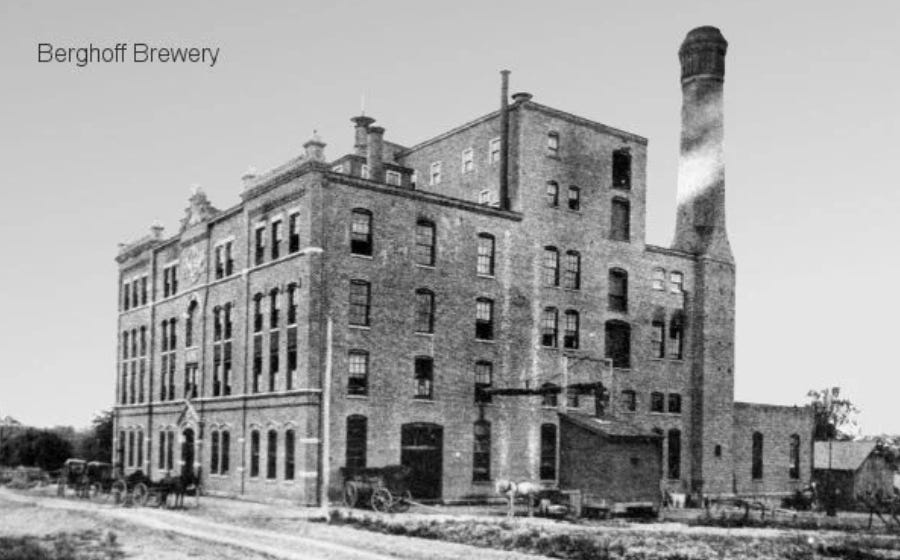
The brewery was finished in 1888 at a cost of $140,000. Somebody, deliberately or not, carved a Star of David into the stone above the main entrance. The choice reads strangely for a German Catholic family’s business until you learn the old brewing-trade belief behind it: King David was said to be the first brewer. By the first week of June, the building was turning out roughly 100,000 barrels a year of true Dortmunder-style beer, made only from malt and hops shipped in from Germany and water filtered from a well two hundred feet below the brewery floor.
The brewery was such a local sensation that within its second week of operation, Herman invited a reporter from the Fort Wayne Morning Journal in for a tour. He met the man at the door personally, handed him a cigar, and walked him through the whole process — malt milling, mash cooking, the hop kettle, the six-story-tall cooling tank — all while assuring him the beer was made from nothing but the finest malt, hops, and water, provable by government records kept on-site for public inspection. The reporter was told the building was “practically fireproof.”

Two months later, on August 22, 1888, it burned to the ground. The fire caused $50,000 in damage, and while it was still raging, Herman was reportedly in his office writing telegrams to equipment suppliers, begging for help rebuilding. He told a reporter that every dollar he had in the world was tied up in the burning building — but that they’d be brewing again within a month.
He was right: brewing resumed September 22, barely a month later, and the fire never touched the cellars where the beer itself was stored, so the brewery never actually stopped serving customers.
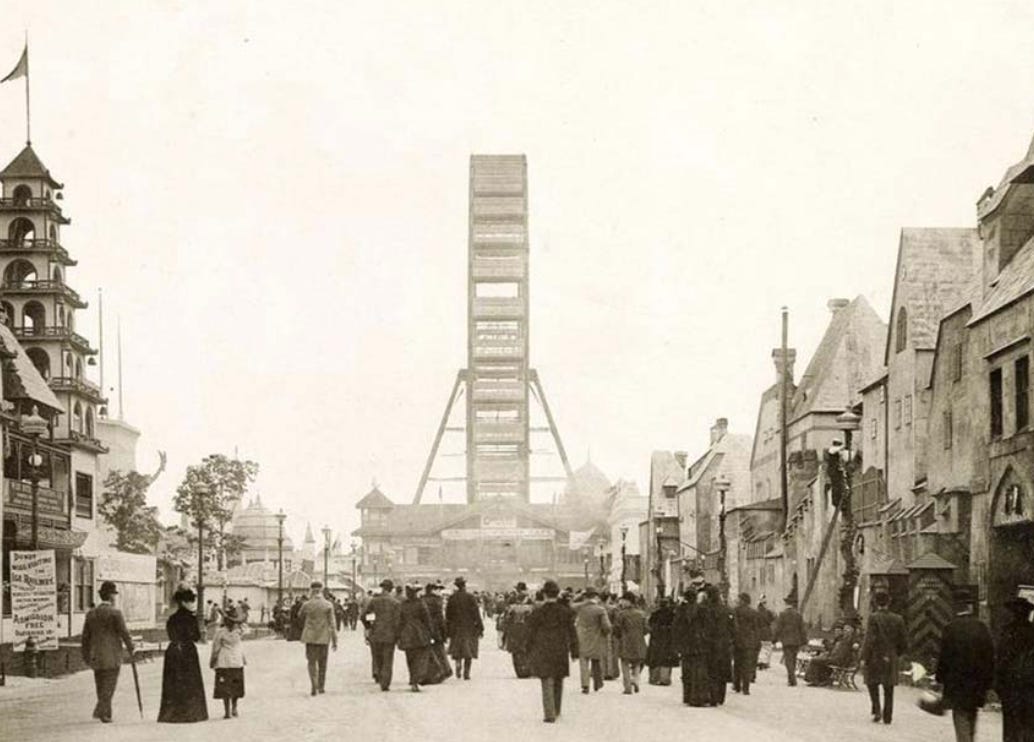
In 1893, the World's Fair came to Chicago, and Herman went with it, setting up a stand on the Midway Plaisance alongside cultural displays from around the world and in the shadows of the world’s first Ferris wheel. There, he sold his beer to the crowds streaming through the fairgrounds. It sold well enough that he started thinking about something more permanent than a fair stand.
But Chicago’s infamous bureaucracy proved to be a challenge. Chicago was an obvious target for Berghoff given the city’s massive German population. But the city turned him down for a brewery wholesale license. City officials told him they already had more than enough beer coming in from out of town.
Herman pivoted and thought creatively. It wasn’t the first time he’d had to tap into that thinking to keep the business thriving.
In 1898, he secured a retail license and opened three saloons. The lone survivor is located on the corner of Adams and State Streets in the Loop and is still going strong today. But it’s had a few hiccups that almost forced it to close over the years.
Surviving the Law Built to Kill It
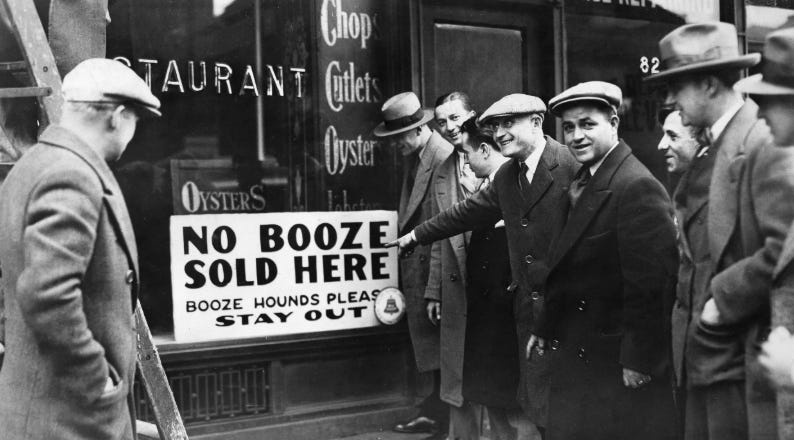
Prohibition should’ve killed The Berghoff story.
It didn’t.
While the booze drained from barrels, the Berghoffs tapped into their ingenuity to keep the operation moving.
They pivoted by brewing “near beer,” legally alcohol-free, extracted from their own product rather than running a speakeasy as many Chicago operators did. The Volstead Act explicitly stated that beer must be below 0.5% alcohol by volume, and many Midwestern brewers turned to the near beer to keep patrons from being entirely thirsty. Near beer saved many of these German beer titans from closing their massive brewing facilities. Parts of the Volstead Act stipulated that the word “beer” could not be used in advertisements, so savvy brewers added words like “tonic” and “cereal beverages” to their cans and bottles.
The Berghoffs also leaned harder into food service and their heritage by serving sauerbraten and schnitzel.
By the time Prohibition ended in 1933, Herman went to City Hall and came away with one of the very first liquor licenses issued in Chicago after repeal. In a city with an endless array of bars, taverns, and restaurants, it’s no small feat that Herman received one of the first. Even if many casual barroom retellings say they got the first in the city’s history. To this day, the license hangs on the restaurant’s wall, coveted like a treasured family heirloom.
From Grandson to Grandson
Herman ran the restaurant until he died in 1934, and it passed to two of his children, Lewis and Clement Berghoff, who kept it going through the middle of the century. In 1960, Lewis’s own son — his grandfather’s namesake, another Herman — stepped in alongside his cousins to run the third generation.
That grandson’s tenure wasn’t smooth. In 1973, tired of how the place was being managed, he packed up his family and left Chicago altogether. It took a decade, and an offer from the relatives he’d left behind, before he came back — and when he did, in 1983, he came back on his own terms, eventually buying out the rest of the family by 1986 and taking full ownership alongside his wife, Jan.
Herman and Jan ran things for the next twenty years. By 2005, in their late sixties and early seventies, they were ready to step back with retirement.
The Closure That Wasn’t What It Looked Like
In December 2005, Herman and Jan announced The Berghoff would close after 107 straight years in business. The news landed in Chicago like the tough loss of a beloved sports team. Many compared it to losing Marshall Field’s, the city’s longtime retail king. Since 1906, Marshall Field’s Beaux Arts flagship store occupied a spot at 111 North State Street, a brisk four-minute walk from The Berghoff.
The Berghoff was one of the last restaurants downtown still employing unionized cooks and waitstaff, speculation followed that the closure was really a quiet way of resetting the labor structure before reopening under different terms.
When a reporter asked Herman and Jan’s daughter, Carlyn Berghoff — who’d bought the restaurant’s assets from her retiring parents — about that speculation directly, she didn’t offer a tidy denial. She said: “We had to do it the way we did it.” That’s it. Make of it what you will.
Immediately following the new family ownership, Carlyn reopened a small basement café within months, then the bar, and within about a year, the full restaurant was back — recipes, longtime executive chef, and all. She ran it for a decade before handing it off in 2016 to her brother, Pete Berghoff, who’d been running the family’s smaller Berghoff Café at O’Hare Airport. Today, Pete continues to run the show, representing the family’s fourth generation.
It Happened Again in 2020
The 2006 closure wasn’t the last time this family decided that stopping was smarter than pushing through.
When COVID-19 hit, The Berghoff reopened briefly after Illinois’s initial shutdown, then closed again in July 2020 — not because of a case among staff, and not because the city required it, but because foot traffic in the Loop had collapsed by more than 95%. Pete made the call to preserve capital rather than bleed it out.
The restaurant stayed dark for fifteen months. When it reopened in July 2021, brand manager Colleen Silk — the family’s public voice said, “It was heartbreaking for the family and for the staff.”
The same instinct and business calculus that guided them through challenging points in the past helped guide them once again. The Berghoff family realized that when the math wasn’t working, it’s much better to stop and reevaluate instead of limping along until there’s nothing left to save.
These repeated decisions, going all the way back to the Volstead Act, are why The Berghoff has a chance to last until 200 years run by the same family.
A Chicago Institution
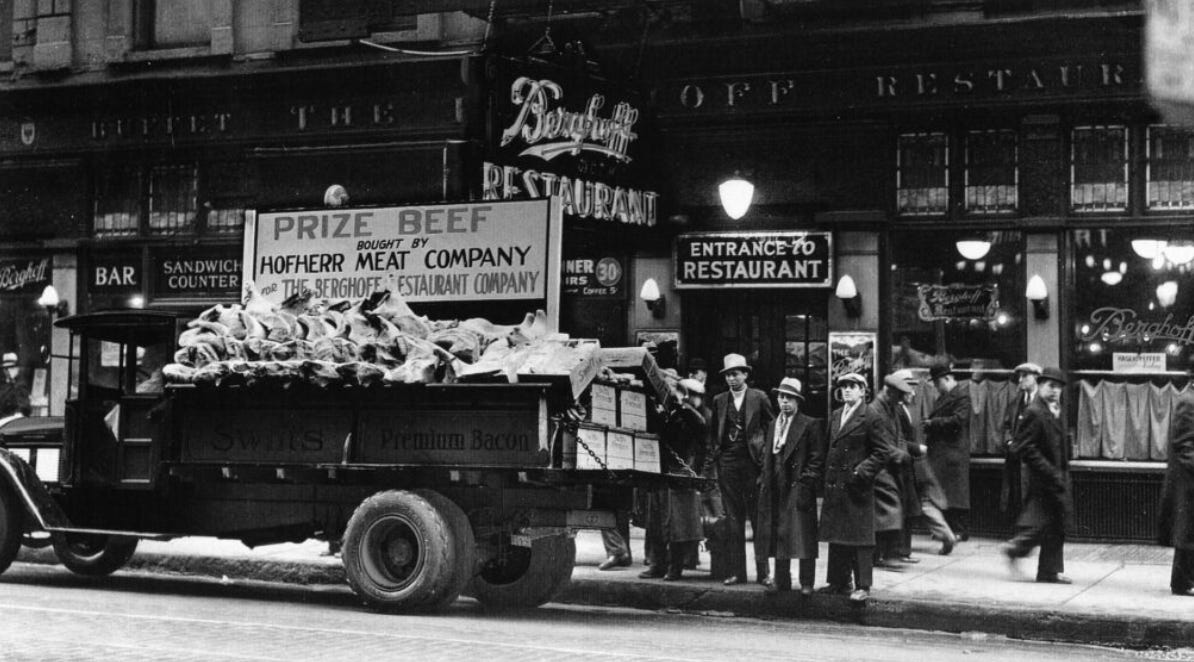
The Berghoff carries a ton of accolades through the course of its venerable 128-year run.
It’s a certified Chicago Landmark, tied to a building with one of the few surviving cast-iron façades from just after the Great Chicago Fire. It won a James Beard Foundation “America’s Classics” award in 1999 — a category built specifically to honor exactly the kind of independent, family-run restaurant that isn’t supposed to still be standing this long.
There’s also a lot of chatter about whether The Berghoff is Chicago’s oldest restaurant. In a city with thousands of establishments, some going back to the turn of two centuries ago, the “oldest restaurant in Chicago” is hotly contested.
Chicago’s own tourism board credits a different restaurant, Daley’s in Woodlawn, with that title; it opened six years earlier, in 1892. What nobody disputes, is that The Berghoff is the oldest family-run restaurant in the entire Chicago Loop.
The Route 66 Connection - The Road Starts Here
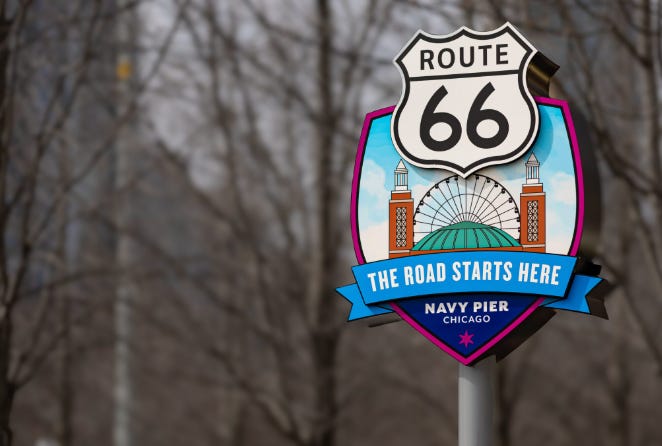
Here’s the detail that put The Berghoff first on this list. Route 66’s official starting point, marked today by a “Begin Route 66” sign, sits on Adams Street at Michigan Avenue, across from the Art Institute. The Berghoff’s address — 17 W. Adams Street — puts it on that exact same street, a couple of short blocks west of the sign. The restaurant is eleven years older than the road that starts practically at its front door, and it’s been standing on that street through every version of Chicago the road has ever driven travelers out of.
What’s Next
This is the first stop along the Mother Road. I am profiling a handful of the family businesses that have triumphed and survived for more than a century along Route 66.
If you know a good hundred-year legacy business hiding along the road, please drop the name in the comments, and I will try to get them included.